
11 Engaging Earth Day Activities For Students
Every year on April 22, people around the world come together to celebrate Earth Day. It is a reminder that the planet we live on needs care and protection.
For students, this day is an opportunity to learn about nature, understand environmental problems, and take small steps that can make a big difference.
Schools often organize Earth Day activities to help students connect with nature in meaningful ways. These activities are not only fun but also educational. They teach children how their everyday actions affect the environment and how they can help protect it.
What is Earth Day?
Earth Day is observed every year on April 22 to raise awareness about environmental protection. It was first celebrated in the United States in 1970 and quickly grew into a global movement. Today, millions of people across more than 190 countries participate in Earth Day events.
The primary goal of Earth Day is to encourage people to care for the planet. Issues such as pollution, climate change, and deforestation continue to harm the Earth in profound ways. Earth Day reminds individuals, communities, and governments that protecting nature is a shared responsibility.
Schools play a vital role in spreading this message. When students learn about the environment from a young age, they develop habits and values that last a lifetime.
Through engaging activities and discussions, teachers can help students understand why protecting nature matters and how simple actions can help preserve the Earth for future generations.
Also Read: 13 Good Habits to Develop in Kids
Activities for Students to Perform on Earth Day
Below are some engaging activities students can do on Earth Day.
1. Tree Plantation
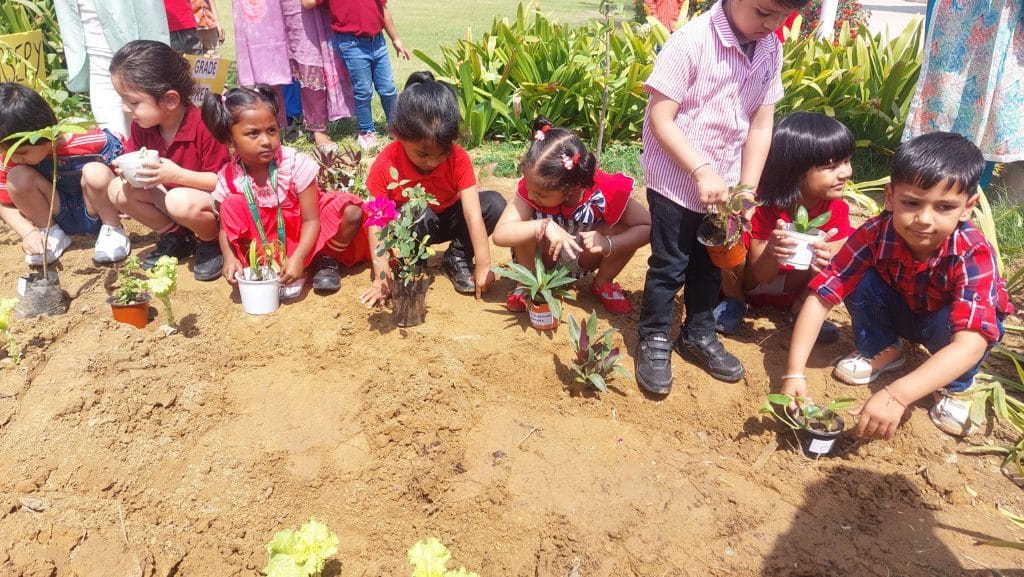
Planting trees is one of the most meaningful ways to celebrate Earth Day. Trees purify the air, provide shade, and support biodiversity. Organising a tree-planting drive at school helps students understand the importance of greenery in their surroundings.
Each student can plant a sapling and take responsibility for caring for it. Watching the plant grow over time makes the experience even more special and memorable.
2. Earth Day Poster Competition
A poster competition is a creative way for students to express their thoughts about the environment. Children can draw posters showing messages about saving water, reducing plastic, or protecting wildlife.
This activity nurtures imagination while simultaneously spreading awareness. Displaying these posters throughout the school helps remind everyone about the importance of caring for the planet.
3. Pick Up Trash
A simple activity like picking up litter can teach students a powerful lesson about responsibility. Teachers can organize a short clean-up activity around the school grounds or nearby parks.
Students can collect waste and sort it into recyclable and non-recyclable categories. Such activities help students understand the consequences of littering and the importance of keeping their surroundings clean.
4. Environmental Awareness Talks
Inviting a guest speaker or facilitating a classroom discussion on environmental issues can be enormously impactful. Students can learn about problems like pollution, climate change, and waste management.
These talks allow them to ask questions and understand how their daily habits affect nature. When children hear real-life examples and practical solutions, they feel more motivated and empowered to act.
Also Read: When is Children’s Day: History, Significance & Celebration
5. Seed Ball Making Activity
Seed ball making is a hands-on and creative activity that connects students directly with nature. Students can mix clay, compost, and native plant seeds to form small balls, which can then be scattered in open spaces, gardens, or parks.
This activity teaches children about native plants, soil health, and how simple actions can help restore green spaces. It is particularly engaging for younger students, giving them a genuine sense of pride and contribution to a greener environment.
6. Nature Walk and Observation
Taking students on a nature walk allows them to observe the environment closely. They can notice different plants, birds, insects, and natural patterns around them. Teachers can encourage students to document their observations in a journal.
This activity helps students understand how nature works and why protecting ecosystems is important. It also cultivates curiosity and a lasting appreciation for the natural world.
7. Integrate Art Projects
Art projects made from recycled materials make environmental learning both fun and tangible. Students can create crafts from old newspapers, cardboard boxes, or plastic bottles.
These Earth Day activities for kids help understand the concept of reusing materials instead of throwing them away. It also shows that waste can often be turned into something creative and useful.
8. Earth Day Quiz
A quiz is an exciting way to test students’ knowledge of environmental topics. Questions can cover topics such as wildlife, forests, recycling, and global environmental issues.
Students can participate individually or in teams. A quiz encourages learning while adding an element of friendly competition. A well-designed quiz helps students retain important environmental facts.
Also Read: 20 Qualities of a Good Student That Lead to Success
9. Eco-Friendly Pledge Activity
Encouraging students to take a simple environmental pledge can have a lasting impact. They can commit to reducing plastic use, conserving water, switching off lights when not in use, or planting more trees.
Writing these pledges on paper leaves or colourful posters and displaying them in the classroom creates a constant visual reminder of their commitment to protecting the planet.
10. Write an Earth Day Essay
Essay writing encourages students to think critically and deeply about environmental issues. Teachers can ask students to write about topics like protecting nature, saving forests, or reducing pollution.
This activity allows children to articulate their ideas and propose solutions in their own words. It also improves their writing skills while encouraging them to reflect on the importance of protecting the Earth.
11. Watch Inspiring Earth Day Stories
Young children often learn best through stories and visuals. Teachers can show short videos or animated stories about nature conservation.
These Earth Day activities for kindergarten are especially helpful because they explain complex ideas simply and engagingly. After watching, teachers can discuss the story with students and ask what they learned from it.
Also Read: Cultivating Knowledge through Creativity: Art Education in the Classroom
How does DPS Gurugram celebrate Earth Day?
DPS Gurugram, Sector 67A, celebrates Earth Day through its Whole Child Approach by organizing tree plantation drives, eco-art competitions, and classroom awareness sessions.
Teachers use technology and project-based learning to explore sustainability. These efforts ensure Earth Day becomes a stepping stone toward building lifelong environmental responsibility in every student.
Conclusion
Earth Day is an opportunity for students to learn about nature and understand their role in protecting it. Through simple activities like planting trees, cleaning surroundings, or creating art from recycled materials, children can develop habits that support a healthier planet.
Schools play a vital role in shaping these values. By organizing meaningful Earth Day programs, institutions like DPS Gurgaon can inspire students to care for the environment and become responsible citizens who work toward a greener future.
 CHAT
CHAT