
Selecting the right type of school is an important decision for parents because it influences a child’s education, daily routine, independence, and personal development.
While some families prefer day schools where children return home after classes, others consider boarding schools that provide a complete residential learning experience.
Both options offer different opportunities, and the right choice depends on a child’s personality, family preferences, and educational goals. Before making a decision, parents should understand how these schools operate, what benefits they offer, and how they support children’s growth.
Let’s explore the key differences between day schools and boarding schools to help you make an informed choice.
What is a Day School?
A day school is an educational institution where students attend classes during regular school hours and return home after completing their daily activities.
Children spend their school hours learning, participating in sports, attending extracurricular activities, and interacting with teachers and classmates. However, their evenings and nights are spent with their families.
Day schools allow parents to remain actively involved in their children’s everyday lives. They can monitor homework, discuss school activities, attend to personal needs, and provide emotional support at home.
Most day schools follow a structured timetable that includes academic lessons, lunch breaks, sports, and other activities.
Some institutions also offer extended daycare or after-school programmes for working parents who need additional supervision for their children.
What is a Boarding School?
A boarding school is an educational institution where students live on campus while attending classes. Along with academic facilities, these schools provide residential arrangements, meals, supervised study sessions, recreational activities, and daily routines.
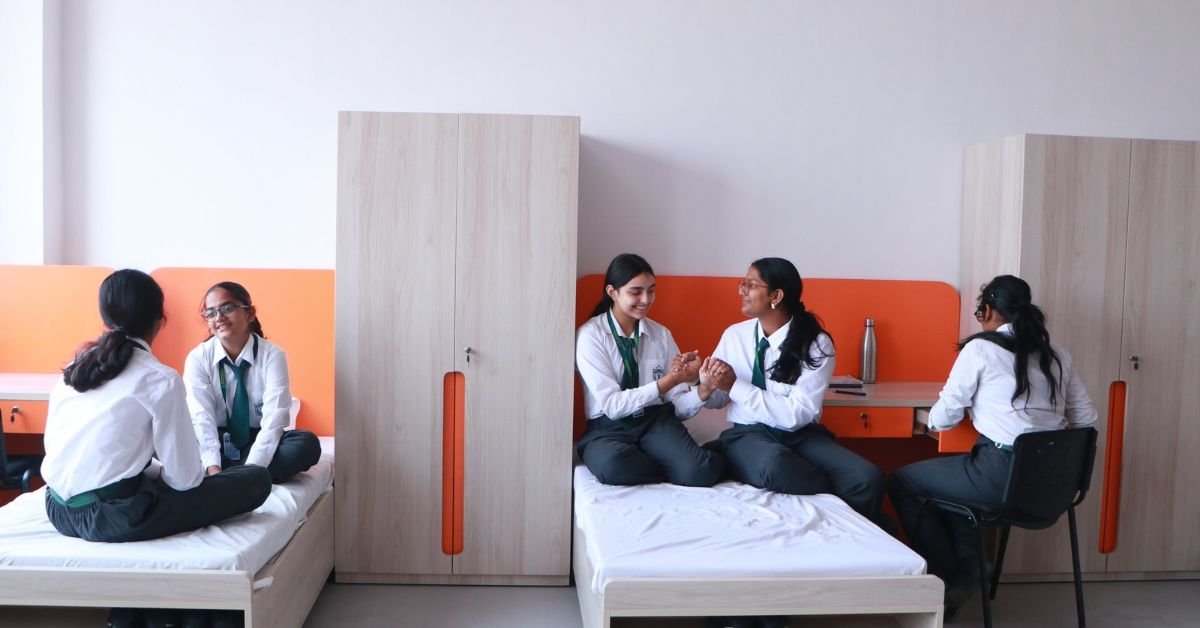
Students generally stay in dormitories or residential houses under the supervision of wardens, house parents, mentors, and other staff members.
Depending on the school’s arrangement, children may stay throughout the week, including weekends, or return home on selected days.
Boarding schools provide a learning environment where education continues beyond classroom hours. Students learn to manage their daily responsibilities, share spaces with others, participate in group activities, and become more independent.
Some institutions also offer weekly boarding and day boarding options, allowing families to choose arrangements that suit their schedules and children’s needs.
Also Read: How to Choose the Right Boarding School for Your Child?
Day School vs Boarding School: Key Differences
Although both school types provide academic education, their daily routines and learning environments differ considerably. Here are some important differences parents should understand.
1. Living Arrangements
The biggest difference is where children spend their time after school.
In day schools, students return home after classes and spend evenings with their families. In boarding schools, they live on campus and follow a supervised residential routine.
2. Parental Involvement
Day schools allow parents to participate more directly in their children’s everyday routines. They can help with homework, discuss daily experiences, and monitor personal development.
Boarding schools provide opportunities for students to become more independent. Parents remain involved through scheduled visits, calls, meetings, and school updates, but children handle more daily responsibilities themselves.
3. Daily Routine
Day school students generally follow school timings and spend the remaining day at home. Their after-school schedules depend on family routines and individual activities.
Boarding students follow a more structured timetable that may include morning exercise, classes, meals, supervised study, sports, hobbies, and bedtime routines.
4. Social Development
Both school types encourage friendships and teamwork, but the opportunities differ.
Day school students interact with classmates during school hours and participate in activities before returning home. Boarding students spend more time with their peers through shared accommodation, meals, sports, and evening activities.
5. Learning Environment
Day schools provide academic learning during school hours, while boarding schools extend the learning environment into residential life.
Boarding students may receive supervised study time and additional academic guidance after classes. Day school students generally complete homework and independent study at home.
6. Costs and Expenses
Day school fees generally cover tuition and selected facilities, although transport, meals, and extracurricular activities may cost extra.
Boarding schools usually have higher overall fees because they provide accommodation, meals, residential supervision, and additional facilities. Parents should compare complete fee structures before making a decision.
7. Family Time
Day school students spend their evenings, nights, and weekends with their families. Boarding students may have less everyday family interaction, depending on their residential arrangement and visiting schedule.
However, boarding arrangements can encourage children and parents to make their communication more meaningful and planned.
Also Read: Benefits of Day Boarding: A Guide for Parents
5 Benefits of Boarding School for Students
Boarding schools offer several opportunities that extend beyond traditional classroom education. Here are five important benefits.
1. Develops Independence and Self-Confidence
Living away from home encourages children to manage everyday responsibilities. They learn to organise their belongings, maintain personal hygiene, follow schedules, and make age-appropriate decisions.
These experiences gradually develop independence and confidence. Students also become more comfortable handling unfamiliar situations and taking responsibility for their actions.
2. Encourages Discipline and Time Management
Boarding schools generally follow structured daily routines. Students learn to balance academic work, sports, hobbies, meals, and rest.
Following a timetable regularly helps children understand the importance of punctuality and responsibility. These habits can also support their academic performance and future professional lives.
3. Provides More Opportunities for Peer Interaction
Students living together get opportunities to interact beyond classroom hours. Shared meals, group activities, residential events, and sports help them develop friendships.
They also learn important social skills such as cooperation, communication, patience, and conflict resolution.
4. Offers a Structured Learning Environment
Many boarding schools provide supervised study sessions, academic mentoring, and additional learning support. Students can seek guidance from teachers or residential mentors when they face difficulties with their studies.
Having dedicated study hours may also help children develop consistent learning habits and reduce distractions.
5. Promotes Overall Development
Boarding schools often provide sports, cultural activities, leadership opportunities, and recreational programmes alongside academics.
Students get opportunities to explore their interests, participate in competitions, and discover their strengths. Living in a residential community also teaches them adaptability and respect for different perspectives.
Also Read: Debunking 10 Common Myths About Boarding Schools
5 Benefits of Day School for Students
Day schools offer a different set of advantages, particularly for families who prefer children to remain close to home.
1. Stronger Family Connections
One of the biggest advantages of day schools is that children spend more time with their families. Parents can participate in everyday conversations, understand their concerns, and celebrate small achievements.
This regular interaction can provide emotional security, especially for younger children.
2. Personalised Attention at Home
Parents can understand their children’s individual learning requirements and provide additional support when needed.
They can monitor homework, encourage reading habits, arrange extracurricular classes, and help children manage academic challenges.
3. Familiar Home Environment
Returning home after school gives children access to a familiar and comfortable environment. They can relax, spend time with siblings, enjoy family meals, and maintain their usual routines.
This arrangement may be particularly suitable for children who are not ready to live away from their parents.
4. Flexible After-School Activities
Day school students can explore interests outside their regular school timetable. Families can choose music lessons, sports coaching, art classes, dance, or other activities according to their children’s preferences.
This flexibility allows parents to create a personalised routine.
5. Generally Lower Residential Expenses
Day schools usually cost less than boarding schools because accommodation and round-the-clock residential supervision are not included.
Families can save on hostel and residential expenses while choosing additional activities according to their budget.
Also Read: Best Boarding School in Gurgaon: 12 Questions to Ask Before You Decide
How to Choose Between Boarding School and Day School?
Choosing between these two options requires understanding your child’s personality, learning preferences, and emotional needs. A school that works well for one child may not necessarily be suitable for another.
Here are some factors to consider before making your decision:
1. Understand your child’s personality: Some children enjoy group living, meeting new people, and exploring new environments. Others feel more comfortable staying close to their families. Consider your child’s readiness before selecting a residential school.
2. Consider your family’s routine: Parents with demanding work schedules may appreciate the structured environment of boarding schools. However, families who want to participate in their children’s daily activities may prefer day schools.
3. Evaluate academic requirements: Compare teaching methods, academic support, extracurricular programmes, and available facilities. Check whether the school offers opportunities that match your child’s interests and future goals.
4. Check the distance and location: If you are considering a boarding school, understand the travel arrangements for holidays and family visits. For day schools, consider daily commuting time and transportation facilities.
5. Review the facilities and supervision: For boarding schools, examine residential rooms, meals, medical support, security, wardens, and student supervision. For day schools, check classrooms, playgrounds, transport, and after-school facilities.
6. Discuss the decision with your child: Children should feel comfortable with their school environment. Explain the arrangements, answer their questions, and consider their opinions before making a final decision.
Boarding or Day School: Which Is Better?
There is no universal answer because both school types offer valuable learning experiences. The better option depends on what a child needs and what parents expect from the educational environment.
Some parents believe that boarding school is better than day school because it encourages independence, discipline, and social development. However, day schools offer regular family interaction, emotional support, and greater flexibility in everyday routines.
Boarding schools may be suitable for children who enjoy structured environments, are comfortable living away from home, and want more opportunities for residential activities. Day schools may be a better choice for younger children or those who benefit from regular parental involvement.
Parents can also consider alternatives such as a day boarding school in Gurgaon, where students stay at school for extended hours, participate in supervised activities, and return home in the evening.
Similarly, a weekly boarding school can suit families who want children to experience residential education during weekdays while spending weekends at home.
The important thing is to choose an arrangement that supports the child’s happiness, education, and overall development rather than following what other families prefer.
Also Read: Understanding the Benefits of Co-Education in School
Day School & Boarding Options at DPS Gurugram Sector 67A
Parents exploring the best schools in Gurugram can consider DPS Gurugram, Sector 67A, for its academic programmes, extracurricular activities, and residential learning options.
The school follows the Whole Child Approach, focusing on five elements: Healthy, Safe, Engaged, Supported, and Challenged. Its approach supports children’s academic, social, emotional, and physical development.
Day School Facilities
DPS Gurugram offers interactive classrooms, science and computer laboratories, a library, art and music spaces, and sports facilities. Students can participate in cricket, football, basketball, swimming, skating, shooting, chess, and taekwondo.
The school also offers CBSE and Cambridge curricula, providing parents with different academic pathways.
Boarding School Facilities
Parents looking for a boarding school in Gurgaon can explore the residential options at DPS Gurugram, Sector 67A. The school offers three arrangements:
- Full Boarding: Students stay on campus throughout the week and weekends.
- Weekly Boarding: Students stay at school during weekdays and return home on weekends.
- Day Boarding: Students attend classes and participate in extended activities, supervised study, sports, and meals before returning home.
These options allow families to select an arrangement that suits their child’s needs and family routine.
Conclusion
Both day schools and boarding schools offer valuable opportunities for children’s academic and personal development. The right choice depends on a child’s personality, family preferences, and learning needs. Parents exploring these options can consider DPS School Gurugram to learn about its day school facilities, residential options, CBSE and Cambridge curricula, and Whole Child Approach. Visiting the campus and speaking with the admissions team can help families make a well-informed decision.