
Education should prepare children for more than examinations and academic achievements. It should help them understand their emotions, discover their talents, develop healthy relationships, and approach challenges with confidence.
This is where holistic education becomes important. By combining classroom learning with physical activities, creative expression, emotional development, and moral values, schools can support children’s overall growth.
Parents today increasingly consider how educational environments prepare students for real-life responsibilities alongside academic success.
Understanding this educational philosophy helps families identify learning opportunities that nurture curiosity, independence, and essential life skills. This blog explores what holistic education means, why it matters, how it works, and its benefits.
What is Holistic Education?
Holistic education is an educational philosophy that focuses on developing the whole child rather than concentrating exclusively on academic performance.
It recognises that intellectual abilities, emotional well-being, physical health, social relationships, creativity, and moral understanding contribute to a child’s growth.
For example, when students complete a science project together, they learn scientific concepts while developing communication, teamwork, observation, and problem-solving abilities. Similarly, theatre can build confidence, creativity, and self-expression.
In simple terms, holistic education prepares children for life beyond the classroom. It encourages them to understand their strengths, respect others, think independently, and become responsible individuals.
Also Read: Art Education in Schools: Importance and Benefits
Why Does Holistic Education Matter?
Modern life requires children to develop abilities beyond memorising information. Critical thinking, adaptability, communication, emotional awareness, and collaboration help students navigate unfamiliar situations and make informed decisions.
A holistic approach to education supports these abilities alongside academic learning. Instead of evaluating children exclusively through examination results, it considers their participation, creativity, personal development, and ability to apply knowledge practically.
Another important consideration is that children have different interests and abilities. While one student may excel in mathematics, another might demonstrate strengths in music, athletics, communication, or artistic expression.
Providing varied learning opportunities allows children to explore these strengths while continuing to develop academically.
Holistic learning is particularly important during the early years of childhood. A nursery school in Gurgaon that encourages play-based learning, storytelling, creative activities, and social interaction can help young children develop communication skills, confidence, curiosity, and emotional awareness.
These early experiences establish a strong foundation for future learning and personal development.
A supportive educational environment can also encourage students to ask questions, learn from mistakes, and approach challenges with greater confidence. Consequently, holistic education helps schools balance academic expectations with personal growth.
Also Read: The Importance of Cultural Activities in School
Key Parts of Holistic Learning
Holistic learning involves several interconnected areas that contribute to children’s development.
1. Intellectual Development
Intellectual development focuses on understanding concepts, acquiring knowledge, asking questions, and solving problems.
Experiments, research assignments, discussions, and practical demonstrations encourage independent thinking and help students understand subjects beyond memorisation.
2. Emotional Development
Emotional development helps children recognise their feelings, manage frustration, and respond constructively to difficulties.
Supportive teachers, open conversations, and thoughtful feedback can help students develop resilience and emotional awareness.
3. Social Development
Group assignments, classroom discussions, and team sports teach children to communicate, share responsibilities, respect different opinions, and resolve disagreements. These experiences help them build positive relationships.
4. Physical Development
Sports, yoga, dance, and outdoor games support fitness, coordination, discipline, and healthy habits. Physical activities also teach teamwork, perseverance, and fair play.
5. Creative Development
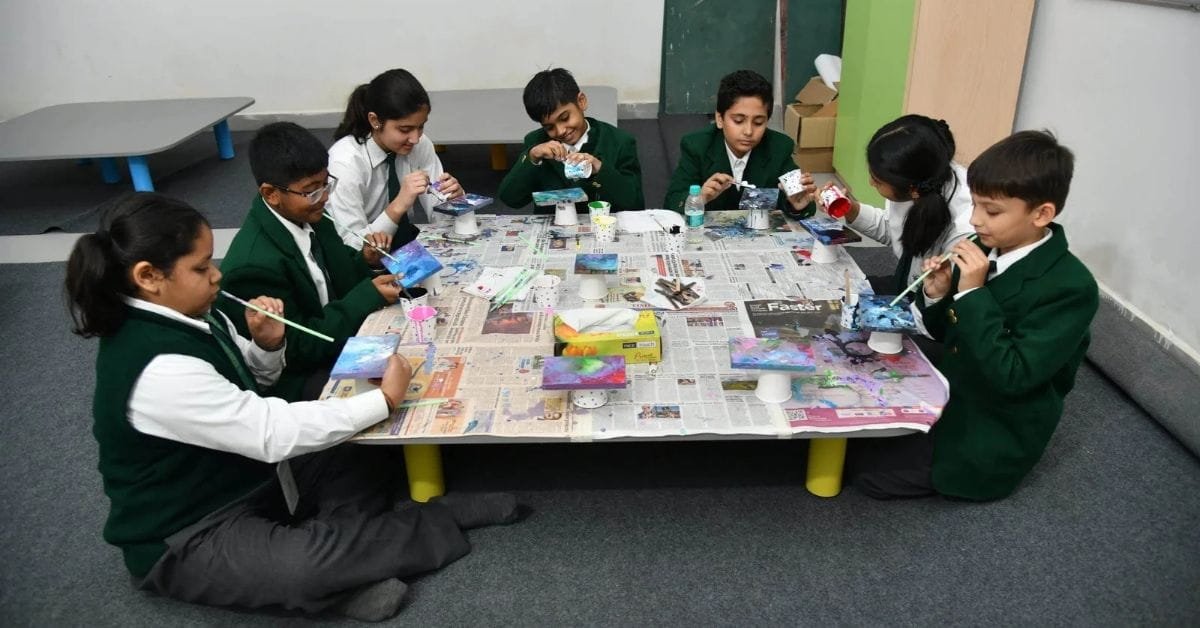
Art, music, theatre, storytelling, and craftwork encourage imagination and self-expression. These activities allow students to explore their interests and experiment with original ideas.
6. Moral Development
Honesty, empathy, fairness, and respect are important values that guide behaviour. Stories, community projects, classroom responsibilities, and everyday interactions can help children understand these principles and practise responsible decision-making.
Together, these areas create opportunities for balanced personal and academic development.
Also Read: The Importance of Physical Education in School
Holistic Education Methods in India
India’s educational framework recognises the value of practical, interactive, and multidisciplinary learning. The National Education Policy 2020 encourages experiential, play-based, arts-integrated, and sports-integrated approaches suited to different learning stages.
1. Experiential Learning
Experiential learning involves understanding concepts through direct participation. Science experiments, educational visits, nature walks, and model-making connect classroom knowledge with everyday experiences.
2. Play-Based and Activity-Based Learning
Young children often learn through games, stories, exploration, and hands-on activities. Puzzles, building blocks, role-play, and interactive exercises support language development, coordination, creativity, and social interaction.
Older students can participate in more challenging activities involving research, collaboration, and independent problem-solving.
3. Arts-Integrated Learning
Arts-integrated learning connects creative activities with academic subjects. Students might explore historical events through drama, understand mathematical patterns through visual art, or learn about regional traditions through music and crafts.
This method encourages creativity while introducing children to India’s cultural diversity.
4. Sports-Integrated Learning
Sports provide opportunities to practise teamwork, discipline, strategic thinking, and perseverance. Schools can incorporate yoga, fitness sessions, organised games, and physical education into their programmes.
Participation matters alongside performance because physical activities can help students develop healthy habits and understand cooperation.
5. Value-Based and Community Learning
Environmental campaigns, charitable initiatives, and community projects encourage students to understand their responsibilities towards society. These experiences can strengthen empathy, civic awareness, and responsible behaviour.
6. Multidisciplinary Learning
Multidisciplinary learning combines knowledge from different subjects. A renewable energy project, for instance, could involve scientific principles, mathematical calculations, geographical understanding, and creative presentations.
These methods make the holistic approach to education practical, engaging, and relevant to Indian classrooms.
Also Read: The Role of Primary Education in Child Development
Benefits of Holistic Education
Holistic education offers several benefits when schools incorporate it thoughtfully into everyday learning.
1. Encourages overall development: Children receive opportunities to strengthen academic knowledge, emotional awareness, physical abilities, and creative skills.
2. Builds confidence: Presentations, performances, and practical assignments encourage students to express ideas, accept responsibilities, and learn from mistakes.
3. Strengthens critical thinking: Open-ended questions and real-world challenges help children analyse information, consider alternatives, and develop solutions independently.
4. Improves communication: Collaborative activities teach students to listen carefully, share opinions, respect others, and work towards common objectives.
5. Supports emotional well-being: Inclusive classrooms can help students feel valued, express concerns, and develop constructive ways of managing challenges.
6. Encourages creativity: Exposure to arts, experiments, technology, and practical projects allows children to discover interests and explore different possibilities.
7. Develops empathy: Community participation and value-based activities help children understand different experiences and recognise how their behaviour affects others.
8. Connects learning with life: Hands-on experiences demonstrate how classroom concepts apply to everyday situations, making education more meaningful and practical.
Also Read: Why Positive Teacher–Student Relationships Matter?
Holistic Education at DPS Gurugram
Parents seeking a school that supports academic achievement alongside personal development can explore DPS Gurugram.
Delhi Public School Gurugram Sector 67A follows a Whole Child Approach that aims to nurture creative, confident, and compassionate individuals.
The school’s educational philosophy highlights cognitive, kinesthetic, and affective development. These areas relate to intellectual learning, physical engagement, and emotional and social growth.
The principles of holistic education are also relevant when considering the best boarding school in Gurgaon, as students need opportunities to grow academically, socially, and emotionally.
DPS Gurugram’s learning opportunities include STEM and robotics, mindfulness and yoga, performing and fine arts, physical education, social-emotional learning, and cultural exchanges. The school also highlights facilities such as science and computer laboratories, a library, swimming facilities, and sports spaces.
These opportunities can help students explore different interests, participate in practical activities, and develop skills beyond conventional classroom instruction. Collaborative assignments, creative projects, physical activities, and independent exploration can also encourage communication, responsibility, and problem-solving.
For parents researching the best CBSE school in Gurgaon, it is worth examining the curriculum, teaching methods, extracurricular activities, student support, and available facilities.
Also Read: 15 Moral Values For Students to Learn
Conclusion
Holistic education supports children’s intellectual, emotional, social, physical, creative, and moral development alongside academic learning. By encouraging curiosity, independence, teamwork, and practical thinking, it prepares students for challenges beyond examinations. Parents should consider schools that provide meaningful opportunities for both academic progress and personal growth.
With its Whole Child Approach and varied learning opportunities, DPS Gurugram offers families an option to explore when seeking an educational environment that values children’s overall development and prepares them for lifelong learning.